Seventeen-year-old Tobias Rainer had spent his entire life moving effortlessly through the polished halls of the Rainer Plaza Hotel.
As the only son of August Rainer, he carried himself with quiet confidence. Staff stepped aside. Guests smiled politely. The marble floors and glass elevators felt as familiar to him as his own bedroom.
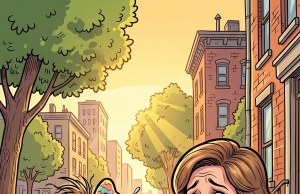
But on a bitter afternoon along Lexington Avenue, everything he believed about his life unraveled in an instant.
It happened when he noticed a boy sitting beneath a crooked traffic sign.
The boy looked worn down by the city. He wore several layered shirts beneath a frayed navy coat, clearly trying to trap warmth that never quite stayed. His dark curls were tangled, his posture guarded. Yet none of that stopped Tobias in his tracks.
It was the boy’s face.
The sharp jawline. The straight nose. The pale green eyes.
They mirrored Tobias’s own.
New York’s noise—sirens, traffic, voices—blurred into the background as the two stared at each other.
“You look like me,” the boy said quietly, his voice rough from cold nights outdoors.
Tobias swallowed. “What’s your name?”
“Jaxon. Jaxon Mirek.”
Mirek had been his mother’s last name before she married August Rainer.
She’d d!ed seven years earlier, leaving behind unanswered questions and memories she never shared. Tobias remembered her warmth, her laughter, the way she hummed while cooking—but almost nothing about her life before him.
“How old are you?” Tobias asked.
“Seventeen,” Jaxon replied. His eyes flicked to Tobias’s tailored coat, then back again. “I’m not trying to scam you. I’ve just been on my own for a while. It hasn’t gone well.”
The resemblance became impossible to ignore.
“Do you know anything about your parents?” Tobias asked.
Jaxon shifted on the thin blanket beneath him. “My mom was Mara Mirek. She died when I was young. The man she lived with afterward wasn’t my dad. Last winter, when he threw me out, I found a box of her papers. My birth certificate didn’t list a father.” He hesitated. “There were photos, though. My mom holding two babies. I always thought one was me. Now I think there were two of us.”
A chill ran through Tobias.
He remembered those photos too—kept in an album his mother never let anyone else touch. Two infants. One in her arms. One in a hospital bassinet. His father had told him the other baby hadn’t survived.
Jaxon went on. “I tracked down people who knew her. Someone from a coffee shop near Midtown said she’d been pregnant with twins before she suddenly disappeared.”
Tobias’s stomach dropped.
“Do you know August Rainer?” Jaxon asked softly.
Tobias’s breath caught. “He’s my father.”
The look on Jaxon’s face hope colliding with fear—nearly knocked Tobias off balance.
Two lives shaped by completely different worlds stood frozen on the sidewalk, staring at the same unanswered truth.
“Come with me,” Tobias said at last.
He brought Jaxon into the Rainer Plaza through the revolving doors. Security noticed but said nothing. In a quiet lounge, Tobias ordered warm food, tea, and a blanket. Jaxon accepted them cautiously, as if unsure whether any of it was real.
“I think we need to talk to my father,” Tobias said.
Jaxon shook his head. “If he didn’t want me then, why would he now?”
“I don’t know,” Tobias admitted. “But he needs to face this.”
August Rainer arrived minutes later, his usual commanding presence faltering the moment he saw Jaxon. Fear flickered across his face before he masked it.
Tobias spoke first. “He says his mother was Mara Mirek.”
August’s composure cracked.
Jaxon met his gaze. “I just want the truth.”

August exhaled slowly. He admitted knowing Mara briefly, being told she was pregnant, then losing contact. Years later, she reached out again, claiming she’d given birth to twins—both his. Before any test could be done, she vanished. After her death, August searched but found only one adoption record: Tobias’s. He believed the rest had been confusion born of stress.
“She wasn’t lying,” Jaxon said quietly. “I was the one who disappeared.”
Five days later, the DNA results arrived.
Probability of paternity: 99.97%.
Silence filled the room.
August apologized, voice breaking. Jaxon stood still, torn between anger, relief, and exhaustion.
“What happens now?” Jaxon asked.
“If you allow it,” August said, “I want to help. School. A home. A place in this family.”
“I don’t want pity,” Jaxon replied. “I want a chance.”
“Then we start there,” Tobias said.
The weeks that followed were slow and careful. Jaxon stayed in the hotel while paperwork was processed. Therapists helped him unpack years of survival. He learned to sleep in a bed again, to eat without rushing, to trust—bit by bit.
Tobias stayed with him through it all. They talked about music, books, and their mother. Tobias filled in memories Jaxon never had. Jaxon shared stories of shelters and cold stairwells. They listened to each other without judgment.
When August publicly acknowledged Jaxon as his son, media attention exploded. Tobias stood beside his brother through every interview, every glare, every question.
By spring, Jaxon returned to school. He joined a gym. He began to smile more easily.
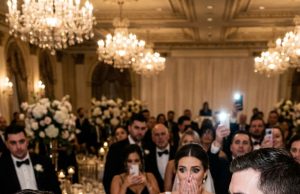
At a charity gala for homeless youth, Jaxon stood on stage and spoke—not as a victim, but as someone rebuilding.
“I used to think being forgotten was the worst thing,” he said. “Now I know being found can be just as terrifying. But family isn’t only where you come from. It’s who stays with you while you move forward.”
When he stepped down, Tobias placed a hand on his shoulder. Jaxon didn’t flinch. He smiled.
Two brothers—one raised in privilege, the other in survival—stood beneath the lights of the ballroom, no longer strangers.
Their lives hadn’t come together by acc:ident.
They came together through truth, courage, and a bond neither knew existed until one cold day on Lexington Avenue—when a reflection changed everything.
And for the first time, both of them felt whole.