I was only eight years old when my mother walked away from me at Barajas Airport.
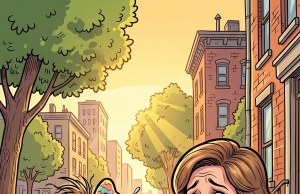
I can still hear the sharp click of her suitcase wheels racing across the glossy floor, every step sounding final. A blue backpack hung awkwardly on my small frame, and the tight knot in my chest made breathing painful. I chased after her, sobbing, my phone shaking in my hand. When she finally answered, I begged, “Mom, please don’t leave me.”
Her reply was icy and unfamiliar, as though I meant nothing to her anymore: “You’ll manage on your own.”
Standing beside her was Daniel, her new husband—a man with a twisted smile and eyes that showed no kindness. He glanced down at me and said flatly, “Struggle makes people stronger.” Her other children, Lucas and Martina, laughed softly, entertained by my fear. No one stopped. No one embraced me. When the gate doors closed, something inside me shattered beyond repair.
I ended up sitting on the airport floor, invisible among rushing strangers who never looked twice. A security officer eventually knelt beside me and asked my name. “Alex,” I whispered. Calls were made, and as I waited, it became painfully clear: my father had died years earlier, and my mother had just chosen a new life that didn’t include me.
That night I slept in a dull social services room under a scratchy blanket, my chest burning with the weight of abandonment. The next morning, a caseworker named Carmen told me I would be transferred to a temporary shelter. I nodded, confused, my thoughts spinning while my heart felt hollow.
Days turned into weeks. My mother never called.
No messages. No explanations. Then one afternoon, Carmen handed me a phone. “There’s someone you might want to contact,” she said gently. The number written on the paper belonged to my grandfather Javier—my mother’s father, a man she barely spoke to. My palms were damp as I dialed. The moment I heard his voice—steady yet trembling—I knew that call would change my life in ways my mother never anticipated.
Javier arrived at the shelter less than two hours later. He walked slowly with his cane, but the instant he saw me, he dropped it and wrapped me in a fierce embrace. “I’m here, Alex,” he whispered. “You’re not alone anymore.” For the first time since the airport, I cried without holding anything back.
He fought relentlessly for custody. I later learned he had warned my mother about Daniel from the very beginning, but she had refused to listen. Javier gathered proof, spoke to attorneys, and confronted his own daughter without hesitation. I watched quietly from the sidelines, small—but finally safe. The judge ruled in his favor. I left the shelter with a borrowed suitcase and something I hadn’t felt in a long time: hope.
Life with my grandfather was simple and sometimes difficult, but it was honest.

We lived in a modest apartment in Alcalá de Henares. He woke me for school, taught me how to pack lunches, and helped me with homework patiently. Some nights I heard him sighing alone in the kitchen, but he never made me feel like a burden. He always said, “You’re my family.”
My mother vanished completely. Her “perfect family” moved abroad, and any news about her was distant and emotionless. I grew up, learned to rely on myself, studied, worked weekends, and stopped waiting for her to come back. With Javier’s encouragement, I earned a degree in business administration and later started a small company. Everything I became was because of him.
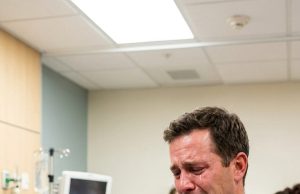
When Javier fell seriously ill, the past resurfaced. While I was signing hospital paperwork, a well-dressed woman appeared in the corridor. It was my mother—thinner, worn down, and alone. She approached with rehearsed tears. “Alex, I’m here. I’ve missed you.”
I felt anger—but also clarity. More than twenty years had passed. She returned only when I was about to lose the man who had truly raised me. She spoke of regret, mistakes, forgiveness. I listened quietly, then finally said, calmly, “You’re too late.” I reminded her of the airport, the phone call, her words: You’re on your own. I told her how my grandfather had saved me, how every achievement had happened without her. She tried to explain—blaming Daniel, fear, circumstances—but I didn’t need answers anymore.
Javier passed away days later.
He left me his home and a letter written in unsteady handwriting. In it, he said he always knew I would be strong—not because I was abandoned, but because I learned to choose who deserved to be family. At the funeral, my mother stood alone. No one reached for her. Perhaps, for the first time, she truly understood.
Weeks later, she asked to meet. I agreed—not for her, but for myself. Over coffee, she admitted her marriage had collapsed, her other children rarely visited, and she felt empty. She asked for another chance. I took a breath and said, “I can forgive you—but I can’t give you back the years you chose to miss.” Forgiveness, I explained, doesn’t guarantee closeness. It simply releases resentment.
Today, I continue running my business, guided by Javier’s memory. I feel no hatred, and no need for approval. I’ve learned that one phone call can alter a life—and that some choices leave permanent scars. My mother and I speak occasionally, with clear boundaries. She’s slowly learning that love isn’t demanded; it’s proven, especially when it’s hardest.
Now I ask you:
Do you believe every family betrayal deserves forgiveness?
Or are there boundaries that should never be crossed?
Sometimes, telling the story is the first step toward healing.